
Introduction
Financial planning is the foundation of a stable and secure financial life. Whether you are a student, a working professional, or someone looking to manage money better, understanding financial planning can make a huge difference. For beginners, the concept may seem overwhelming at first, but it is actually simple when broken down into clear steps. Essentially, financial planning is about managing your money wisely, setting goals, and preparing for both expected and unexpected events in life.
Many people struggle with money because they don’t have a clear plan. They may earn well but spend carelessly, save inconsistently, or invest without proper knowledge. Financial planning ensures that every dollar you earn is used efficiently. It helps you save for emergencies, plan for major life events, invest for the future, and even reduce stress related to money. For beginners, the first step is understanding what financial planning really means and how to apply it practically.
What is Financial Planning?
Financial planning is the process of managing your money to achieve specific life goals. It involves analyzing your income, expenses, savings, and investments to make informed decisions about your finances. The goal of financial planning is to ensure you can meet your present and future needs without unnecessary stress.
For beginners, think of financial planning as a roadmap. Just as you plan a trip with a destination in mind, financial planning helps you map out how to reach your financial goals. These goals can include buying a home, saving for education, preparing for retirement, or building an emergency fund.
Key elements of financial planning include:
- Budgeting: Tracking income and expenses to ensure you spend wisely.
- Saving: Setting aside a portion of your income regularly.
- Investing: Growing your money through stocks, bonds, or other assets.
- Risk Management: Protecting yourself with insurance and emergency funds.
- Tax Planning: Reducing tax liabilities through smart financial decisions.
In simple terms, financial planning is about making your money work for you instead of letting it slip away. It is not just for wealthy individuals; anyone can start, even with a small income.
Why is Financial Planning Important?
Financial planning is crucial for several reasons:
- Achieve Life Goals: Whether buying a car, paying for education, or traveling, financial planning helps you reach goals faster.
- Financial Security: Proper planning ensures you are prepared for emergencies like medical bills, job loss, or unexpected expenses.
- Debt Management: Planning helps you reduce unnecessary debt and avoid high-interest loans.
- Wealth Creation: Smart financial planning allows you to invest wisely and build long-term wealth.
- Stress Reduction: Money-related stress can impact your health and relationships; planning reduces uncertainty.
Without financial planning, people often spend impulsively, save irregularly, and face financial difficulties during emergencies. By starting early, you can avoid these challenges and ensure a smoother financial journey.
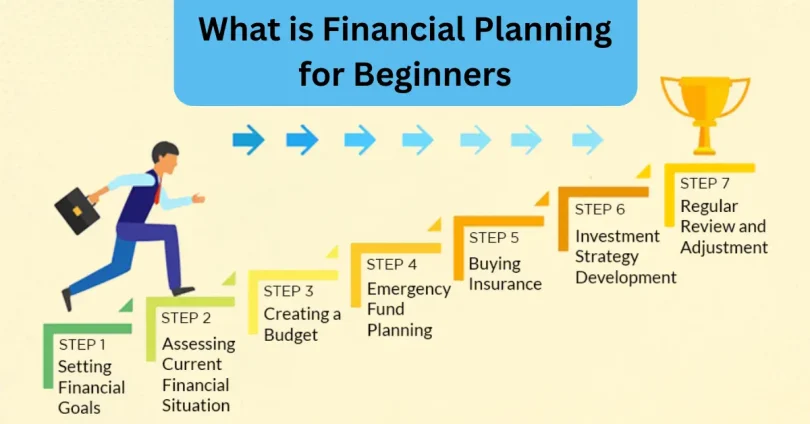
Detailed Step-by-Step Guide
Here is a step-by-step approach to financial planning for beginners:
Step 1: Assess Your Current Financial Situation
Before creating a plan, you need to understand your finances:
- List all sources of income (salary, side income, investments).
- Track your monthly expenses (rent, bills, groceries, entertainment).
- Identify debts and liabilities (credit cards, loans, personal debt).
- Calculate your net worth (assets minus liabilities).
Example: If you earn $2,500 per month, spend $2,000, and have $500 in savings, you know your starting point.
Step 2: Set Clear Financial Goals
Goals give direction to your financial planning. Categorize them:
- Short-Term Goals: Up to 1 year (emergency fund, small purchases).
- Medium-Term Goals: 1–5 years (buying a car, vacation, home down payment).
- Long-Term Goals: 5+ years (retirement, children’s education).
Use the SMART method (Specific, Measurable, Achievable, Relevant, Time-bound) to make goals realistic.
Step 3: Create a Budget
Budgeting is key to controlling finances. Follow these steps:
- Record monthly income and expenses.
- Categorize expenses as essential (rent, groceries) and non-essential (entertainment).
- Allocate a portion of income to savings and investments.
- Stick to the budget consistently.
Example: A 50/30/20 rule can help beginners:
- 50% for needs
- 30% for wants
- 20% for savings and debt repayment
Step 4: Build an Emergency Fund
An emergency fund is money set aside for unexpected events. Beginners should aim for:
- At least 3–6 months of living expenses.
- Keep it in a liquid account (savings account or money market fund).
Example: If your monthly expenses are $1,500, your emergency fund should be $4,500–$9,000.
Step 5: Manage Debt
Debt can slow down financial growth. Strategies include:
- Pay off high-interest debt first (credit cards, payday loans).
- Consider debt consolidation for better interest rates.
- Avoid accumulating new unnecessary debt.
Example: If you have $5,000 in credit card debt at 20% interest, paying it off early saves you money in interest.
Step 6: Start Saving and Investing
Savings alone may not grow enough to meet long-term goals, so investing is essential:
- For Beginners: Start with low-risk investments like fixed deposits, index funds, or mutual funds.
- Diversify: Don’t put all money into one investment.
- Regular Investment: Use SIP (Systematic Investment Plan) for consistent growth.
Example: Investing $200 monthly in a mutual fund with 8% annual return can grow significantly over 10 years.
Step 7: Plan for Retirement
Even beginners should think about retirement early:
- Contribute to retirement accounts (401k, IRA, or local equivalents).
- Take advantage of employer matching if available.
- Review and adjust retirement goals regularly.
Example: Starting to save $100 monthly at age 25 can lead to a substantial retirement corpus by 60.
Step 8: Protect Yourself with Insurance
Insurance safeguards your finances from unexpected risks:
- Health insurance
- Life insurance
- Property insurance
Without protection, emergencies can wipe out savings and derail financial goals.
Step 9: Monitor and Review Regularly
Financial planning is not a one-time activity. Regularly:
- Track income and expenses monthly
- Review investments and adjust if necessary
- Update goals as life circumstances change
Example: If you get a salary increase, consider increasing savings and investments proportionally.
Benefits of Financial Planning
Financial planning provides numerous benefits:
- Clear financial goals and direction
- Improved budgeting and spending control
- Reduced debt and better debt management
- Preparedness for emergencies
- Long-term wealth creation
- Peace of mind and reduced stress
- Tax savings and efficient use of money
Disadvantages / Risks
While financial planning is highly beneficial, there are some risks:
- Overestimating income or underestimating expenses
- Investing without understanding risk levels
- Rigid planning that doesn’t adapt to life changes
- Reliance on professional advisors without personal knowledge
Understanding these risks helps beginners stay realistic and flexible.
Common Mistakes to Avoid
Beginners often make mistakes that can affect financial planning:
- Ignoring Budgeting: Not tracking expenses leads to overspending.
- Not Saving for Emergencies: Lack of an emergency fund causes stress during unexpected events.
- Overborrowing: Excessive debt can trap you financially.
- Ignoring Retirement Planning: Delaying retirement savings reduces long-term growth.
- Emotional Investing: Decisions based on fear or hype can cause losses.
- Neglecting Insurance: Skipping insurance exposes you to high financial risk.
Avoiding these mistakes ensures your financial plan remains effective.
FAQs
1. What is the best way to start financial planning as a beginner?
Start by tracking your income and expenses, setting realistic goals, and creating a simple budget. Then gradually build savings and explore low-risk investments.
2. How much should I save monthly?
A good starting point is 20% of your income. Adjust based on your goals and living expenses. Focus on building an emergency fund first.
3. Can I start investing with a small amount?
Yes, many platforms allow small monthly investments. Even $50–$100 can grow over time with consistent contributions.
4. Is financial planning only for wealthy people?
No, financial planning is for everyone. Regardless of income, planning ensures efficient use of money and prepares you for the future.
5. How often should I review my financial plan?
Review at least once every six months or whenever major life changes occur, like a job change, marriage, or a new financial goal.
6. What is the difference between saving and investing?
Saving involves putting money aside safely for short-term needs, while investing is using money to grow wealth over the long term through assets like stocks or mutual funds.
7. Do I need a financial advisor as a beginner?
Not necessarily. Beginners can start with simple budgeting and savings. Advisors are helpful for complex investments or tax planning but are not mandatory.
8. How do I manage debt while saving?
Prioritize high-interest debt first, create a budget, and allocate funds to both debt repayment and savings simultaneously.
Expert Tips & Bonus Points
- Automate Savings: Set up automatic transfers to savings accounts.
- Start Small: Even small contributions matter if done consistently.
- Use Technology: Financial apps help track spending and investments.
- Educate Yourself: Read books, blogs, or attend webinars on personal finance.
- Diversify Investments: Don’t rely on a single asset; spread risk.
- Stay Disciplined: Avoid impulsive purchases and stick to your budget.
- Review Goals: Life changes; update your financial plan regularly.
Bonus Tip: Keep a simple financial journal. Document income, expenses, and reflections monthly. This helps you understand habits and make informed decisions.
Conclusion
Financial planning is a powerful tool for building a secure, stress-free, and prosperous life. For beginners, it starts with understanding your current financial situation, setting clear goals, creating a budget, and gradually saving and investing. By following a step-by-step approach, anyone can take control of their money and prepare for both expected and unexpected life events.